
Dental Health
Teeth Grinding in Dubai: Causes, Signs and When You Need a Night Guard
Waking with a sore jaw or worn teeth? Learn why people grind their teeth, the signs to look for, how a night guard helps and when to see a dentist in Dubai.
- Published
- 5 November 2026
- Reading time
- 6 min
- Written by
 Dr. Abdelrahman Ezzat
- Reviewed by
- Dr. Abdelrahman Ezzat
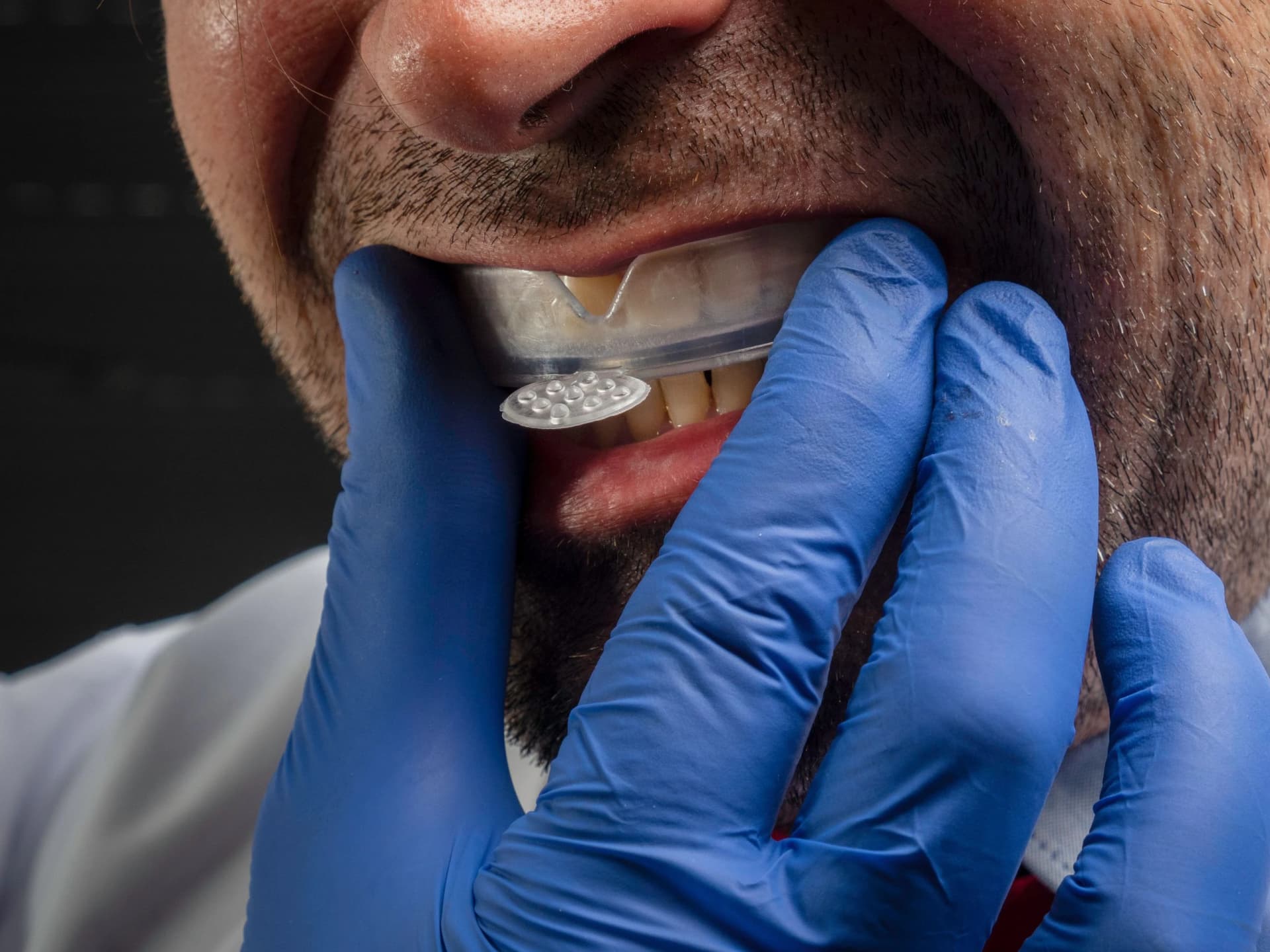
Teeth grinding in Dubai is something many people only discover when a partner mentions the noise, or a dentist points out worn edges during a check-up. Because most of it happens during sleep, you can grind your teeth for years without realising. The habit, known as bruxism, can quietly wear teeth down and damage restorations.
This guide explains why grinding happens, the signs to look for, what a night guard can and cannot do, and when to get help. It is general information, so use it alongside an examination. You can also read about custom mouthguards and night guards at MID Dental Clinic in City Walk.
Quick answer: do I need a night guard for teeth grinding?
You may benefit from a night guard if you have signs of grinding or clenching, such as worn teeth, small fractures, a tired jaw in the morning or repeatedly damaged restorations. A guard protects your teeth, but it may not stop the habit, so a dentist should assess the likely cause first.
What is teeth grinding?
Bruxism means grinding your teeth or clenching your jaw. The NHS notes that it can happen while you are awake or asleep. Daytime clenching often goes unnoticed, particularly during concentration or stress, while night-time grinding can involve considerable force with no awareness of it at all.
Occasional grinding may do no harm, and the NHS says treatment is not always necessary. It matters when it starts to damage your teeth or restorations, or causes pain.
What causes teeth grinding?
It is not always clear why a person grinds their teeth. The NHS lists these common links:
- Stress and anxiety: these are the most common cause.
- Sleep problems: including snoring and sleep apnoea.
- Certain medicines: including some sleep, mood and anxiety medicines. Do not stop any medicine without speaking to your doctor.
- Lifestyle factors: smoking, and heavy alcohol or caffeine use.
More than one factor may be involved, which is why a single fix does not work for everyone.
What are the signs of teeth grinding?
- a sore, tight or tired jaw, especially in the morning;
- headaches or earache;
- teeth that look shorter, flatter or chipped;
- increased tooth sensitivity;
- cracked teeth, or fillings and crowns that keep failing;
- disrupted sleep, or a partner who hears you grinding.
Your dentist may spot wear patterns before you notice anything yourself. Regular reviews help, and our guide to how often to have a dental check-up explains how your interval is set. If your teeth already look shorter, read our guide to tooth wear in Dubai.
How does a night guard help?
A night guard is a removable appliance worn over your upper or lower teeth while you sleep. It places a protective layer between the teeth, so grinding forces act on the guard rather than on your enamel or restorations.
It is important to be clear about its limits. A night guard protects tooth surfaces, but it does not necessarily stop bruxism or treat every cause of jaw pain. Think of it as protection, used alongside any work on the underlying cause.
A night guard may be useful for:
- patients with signs of grinding or clenching;
- people with unexplained tooth wear or small fractures;
- patients who frequently damage restorations;
- people with morning jaw-muscle fatigue;
- patients advised to protect veneers, crowns or other restorations.
How is a custom night guard made?
- Examination. Your teeth, gums, bite and existing restorations are checked.
- Impression or scan. An impression or digital scan records the shape of your teeth.
- Fabrication. The guard is made for its intended purpose.
- Fitting. The fit and bite are checked and adjusted.
- Instructions. You are shown how to wear, clean and store it.
The NHS notes that a dentist can make a guard to fit precisely over your upper or lower teeth. Sports mouthguards are different: they are designed for impact protection, while a night guard is designed around grinding, clenching and your bite.
How do you look after a night guard?
- Rinse it after use and clean it according to your instructions.
- Let it dry, then store it in a ventilated case.
- Avoid hot water, which may distort the material.
- Bring it to your regular check-ups.
A guard may need replacing if it becomes worn, damaged, loose or uncomfortable. Signs of heavy wear on the guard are useful information for your dentist, so mention them.
Why does grinding matter if you have veneers or crowns?
Restorations can chip or fracture under repeated grinding forces, so protecting them is often part of keeping them long term. If you have veneers, a guard may be recommended, and our guide to how long veneers last explains why habits like this matter. If you are planning cosmetic treatment on your front teeth, see e-max veneers for front teeth, and tell your dentist if you know you grind. Implant restorations need the same care, so mention it if you are considering dental implants too.
Heavy bite forces are also one of the things a dentist considers when assessing receding gums.
What can you do at home?
The NHS suggests these steps may help:
- Relax. Try breathing exercises, music or regular exercise.
- Improve your sleep. Keep a consistent bedtime and a calming routine, in a dark, quiet room.
- Ease jaw pain. Take suitable pain relief such as paracetamol or ibuprofen as directed, and use an ice pack wrapped in a tea towel for 20 to 30 minutes.
- Reduce triggers. Avoid smoking, excess alcohol and caffeine.
- Rest your jaw. Avoid chewing gum and hard foods when your teeth or jaw hurt.
During the day, it can also help to notice whether your teeth are touching. At rest, they should generally be slightly apart.
When should you see a dentist?
The NHS advises seeing a dentist if you grind your teeth and notice tooth damage or sensitivity, if you have jaw, face or ear pain, or if a partner says you grind in your sleep. Parents worried about a child’s grinding should also seek dental advice, and our guide for parents explains how to set up regular visits.
If a tooth breaks or a restoration comes off, see our guide to dental emergencies in Dubai. Snoring or waking unrefreshed may be worth raising with your doctor as well, because sleep problems can be linked to grinding.
What if the problem is jaw pain?
Persistent jaw pain, clicking or limited opening may involve the jaw joint and muscles as well as the teeth. Your dentist will assess this and can advise on the next step. MID Dental Clinic’s team includes Dr. Rajesh Raveendranathan, a visiting consultant in TMJ and dental sleep medicine.
Questions to ask your dentist
- Do you see signs that I grind or clench my teeth?
- How much wear has happened so far?
- Would a night guard help in my case?
- Should it go on my upper or lower teeth?
- Are any of my restorations at risk?
- How will we monitor changes over time?
Book a teeth grinding assessment in City Walk, Dubai
MID Dental Clinic is located at G08, Building 14, City Walk Residential, Al Wasl, Dubai, UAE. Call +971 54 211 9996 or request an appointment. The clinic is open Tuesday to Sunday, 12:00 PM to 8:00 PM, and closed on Mondays. Explore General and Preventive Dentistry or meet Dr. Abdelrahman Ezzat, the clinic’s Medical Director.
- teeth grinding Dubai
- bruxism Dubai
- night guard Dubai
- jaw clenching
- صرير الأسنان في دبي
- واقي الأسنان الليلي
Next step
Does this apply to you?
Book a consultation and we will look at your case specifically, rather than in general.
Request an appointment
Common questions
Related questions.
City Walk, Dubai
Does this apply to you?
Book a consultation and we will look at your case specifically, rather than in general.