
E-max Veneers for Front Teeth in Dubai: Are They Right for You?
Considering E-max veneers for your front teeth in Dubai? Learn about appearance, suitability, tooth preparation, dark-tooth masking, limitations and long-term care.
- Published
- 12 October 2026
- Reading time
- 4 min
- Written by
- Dr. Abdelrahman Ezzat
- Reviewed by
- Dr. Abdelrahman Ezzat
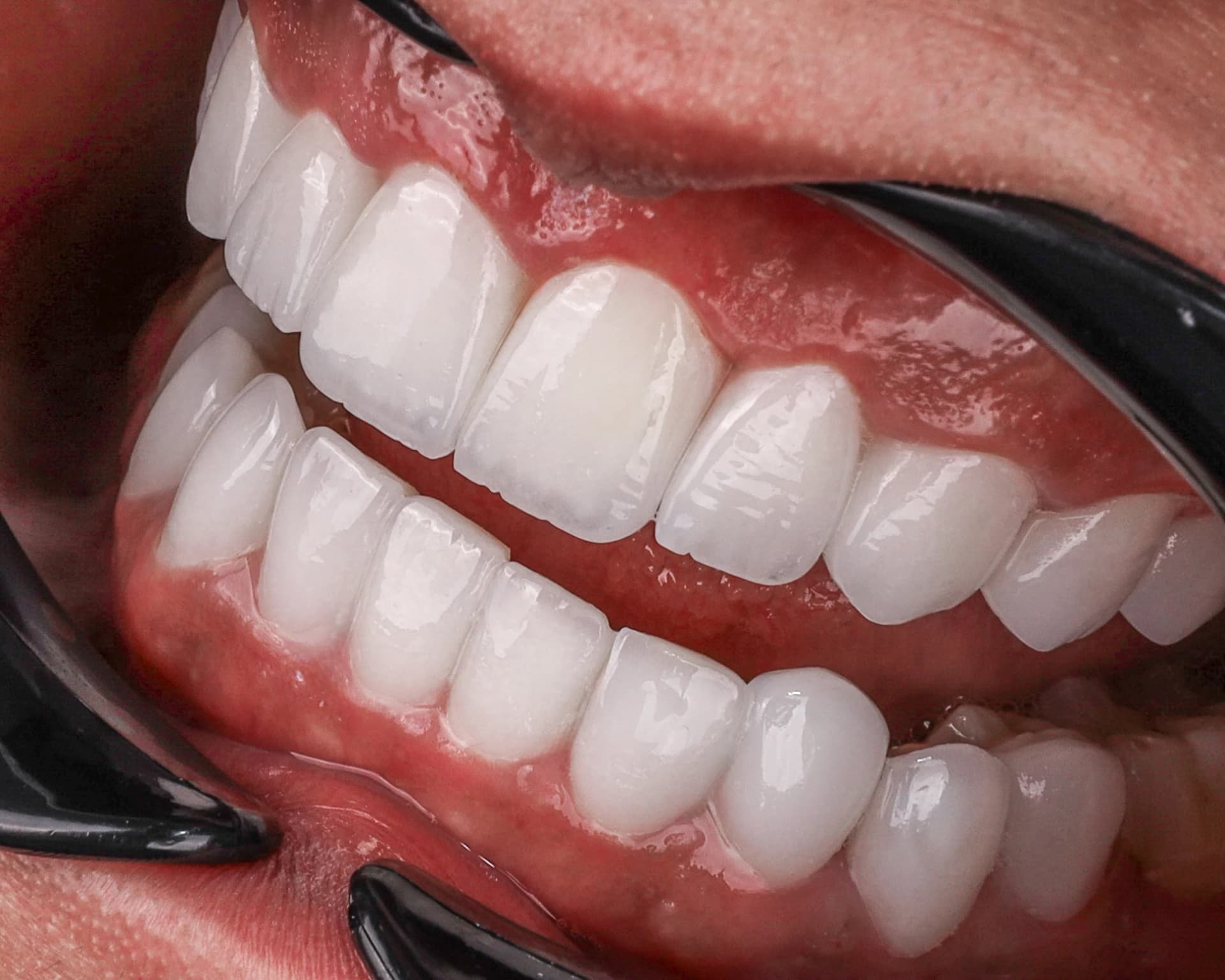
E-max veneers are a popular ceramic option for improving the visible front teeth, but the material alone does not guarantee a natural or long-lasting result. Successful treatment depends on diagnosis, conservative preparation, smile design, laboratory communication, bonding and maintenance. A consultation is therefore needed to determine whether E-max is suitable for your teeth rather than selecting it only by name.
What are E-max veneers?
E-max is commonly associated with lithium-disilicate glass ceramic. It can be produced using pressed or CAD/CAM workflows and is used for selected veneers and other dental restorations. Its optical properties can help reproduce the translucency, texture and colour variations expected in natural front teeth.
Learn more about the material and treatment process in our main guide to E-max veneers in Dubai.
Are E-max veneers suitable for front teeth?
E-max veneers may be considered for front teeth with persistent discolouration, uneven proportions, small gaps, worn or chipped edges, irregular shapes or mild visual misalignment. The teeth must first be examined for decay, cracks, existing restorations, gum health, enamel availability and bite forces.
Veneers change the visible surfaces of teeth; they do not move tooth roots or correct significant bite problems. Orthodontics, whitening, composite bonding, crowns or a combined plan may be more appropriate in some cases.
Why is E-max used in the smile zone?
The front teeth require more than a uniform white colour. A natural-looking restoration should consider translucency, brightness, surface texture, tooth proportions and how light moves through the ceramic. Lithium-disilicate ceramics are available in different levels of translucency and opacity, allowing the clinician and laboratory to plan around the underlying tooth colour.
E-max is also not unbreakable. Chipping or fracture can occur, particularly with trauma, an unfavourable bite, nail biting, using teeth as tools or unmanaged grinding. Material selection must be combined with appropriate design and function.
Can E-max veneers cover dark or discoloured teeth?
They can mask many colour concerns, but the result depends on the severity of discolouration, ceramic thickness, translucency and cement shade. A very thin and highly translucent veneer may allow a dark underlying tooth to influence the final colour. Increasing opacity or thickness may improve masking but can affect translucency or require more space.
This balance should be tested before final bonding. Photographs, shade records and trial pastes help the dentist and laboratory evaluate how the veneer will interact with the tooth underneath. Severely discoloured teeth may require a different restorative strategy.
Do front teeth need shaving for E-max veneers?
The amount of preparation varies. Some favourable cases can be treated with minimal preparation, while others require controlled enamel reduction to create space and avoid bulky contours. Teeth that project forward, contain existing restorations or need substantial colour masking may require a different preparation design.
No-prep treatment is not appropriate for everyone. Adding ceramic without adequate space can make teeth look thick and may create difficult-to-clean margins. Read our guide to no-prep veneers in Dubai to understand the selection criteria.
How many E-max veneers are needed?
There is no standard number. One veneer may restore a single malformed or discoloured tooth, while a broader smile plan may involve several visible teeth. The decision depends on smile width, lip movement, tooth shade, symmetry and where the transition between treated and untreated teeth will appear.
The aim should be to treat only teeth that have a clear reason for restoration. See our guide to how many veneers you may need.
What happens during E-max veneer treatment?
Treatment begins with an examination and discussion of your goals. Records may include photographs, scans, bite analysis and clinically necessary X-rays. A digital design or diagnostic mock-up can preview tooth length and proportions before preparation.
If preparation is needed, the dentist removes a controlled amount of tooth structure and records the final shape. Temporary veneers may be used while the ceramic restorations are produced. At the fitting appointment, the dentist checks the fit, shade, contours and bite before completing the adhesive bonding procedure.
How long can E-max veneers last?
Clinical studies report strong long-term survival for lithium-disilicate veneers, but an individual lifespan cannot be guaranteed. Longevity depends on case selection, bonding substrate, preparation, bite, grinding, oral hygiene, gum health and follow-up care.
Even a veneer that remains in place may eventually need polishing, repair or replacement because of chipping, marginal changes, gum recession or changes in nearby teeth. Read our broader guide to how long veneers last.
How do you care for E-max veneers?
Brush gently twice daily with a soft toothbrush and clean between the teeth every day. Avoid biting ice, opening packages with your teeth or repeatedly biting hard objects. Attend dental examinations and professional hygiene appointments so the margins, gums and bite can be monitored.
If you grind your teeth, discuss bite management and whether a protective night guard is appropriate. Contact the clinic if a veneer feels loose, the bite changes, an edge chips or pain develops.
E-max veneer consultation in City Walk, Dubai
MID Dental Clinic is located at G08, Building 14, City Walk Residential, Al Wasl, Dubai. Dr. Abdelrahman Ezzat, Medical Director and General Dentist, provides preventive, restorative and aesthetic dental care with attention to minimally invasive planning.
An examination is necessary to compare E-max with porcelain veneer treatment, bonding, whitening, orthodontics and other options. Visit the MID Dental Clinic website or request an appointment for an individual assessment in City Walk.
- E-max veneers for front teeth
- E-max veneers Dubai
- Lithium disilicate veneers
- Front teeth veneers Dubai
- Natural-looking veneers
- Cosmetic dentist City Walk
- فينير إيماكس للأسنان الأمامية
- فينير إيماكس دبي
- فينير طبيعي في دبي
Next step
Does this apply to you?
Book a consultation and we will look at your case specifically, rather than in general.
Request an appointment
Common questions
Related questions.
City Walk, Dubai
Does this apply to you?
Book a consultation and we will look at your case specifically, rather than in general.