
Cosmetic Dentistry
How Long Do Veneers Last in Dubai? E-max and Porcelain Veneer Lifespan
Ceramic veneers can remain functional for many years, but there is no guaranteed lifespan. Learn what research shows and how material, enamel, bite, grinding and maintenance affect veneer longevity.
- Published
- 4 October 2026
- Reading time
- 7 min
- Written by
- Dr. Abdelrahman Ezzat
- Reviewed by
- Dr. Abdelrahman Ezzat
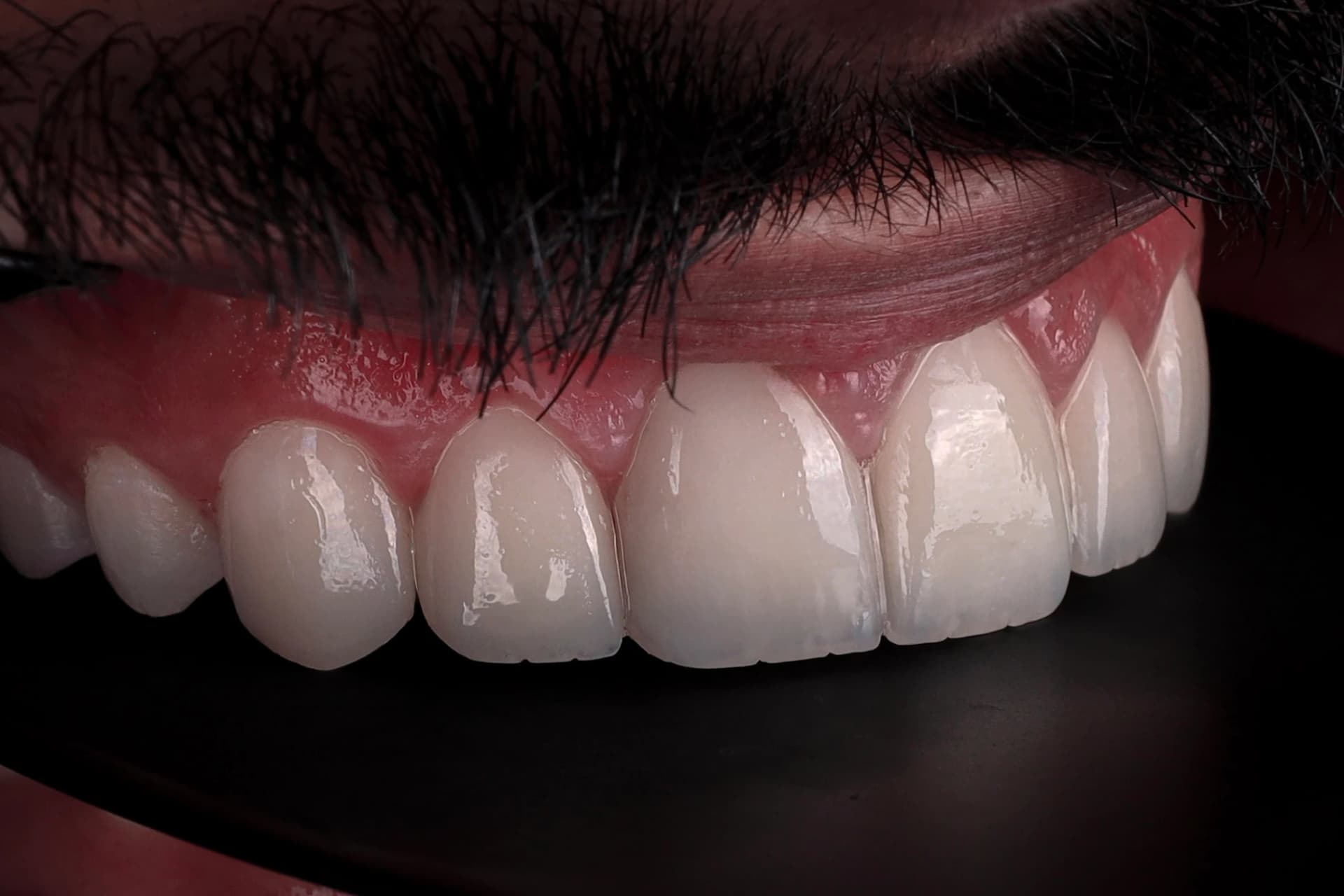
Porcelain and E-max veneers are long-term dental restorations, but they do not have a guaranteed lifespan. Long-term clinical research has reported survival rates above 90% at 10 years in appropriately selected and maintained ceramic veneer cases. However, this does not mean that every veneer will last for a specific number of years.
Longevity depends on the veneer material, remaining enamel, bonding, bite forces, grinding habits, oral hygiene and follow-up care. Some veneers may require repair or replacement earlier, while others may remain functional considerably longer.
At MID Dental Clinic in City Walk, Dubai, the dentist can assess these factors before recommending veneer treatment.
How long do porcelain veneers usually last?
Porcelain veneers are generally considered a long-term cosmetic restoration. Systematic reviews and clinical studies have found high survival rates over periods of approximately 10 years, with some studies following veneers for considerably longer.
Survival does not always mean that a veneer remains completely unchanged. A restoration may still require polishing, minor maintenance, bite adjustment or monitoring while remaining in place.
The expected lifespan for an individual patient cannot be predicted from the material name alone.
What does veneer survival mean?
In clinical studies, survival usually means that the veneer remains in place and does not require complete replacement. Success may use stricter criteria and consider whether the restoration has experienced:
- Small chips
- Marginal staining
- Changes in surface texture
- Minor debonding or repair
- Changes in the surrounding gum tissue
- Colour or aesthetic changes
This is why a percentage from a research study should not be interpreted as a personal guarantee.
How long do E-max veneers last?
E-max veneers are commonly made from lithium-disilicate ceramic. Long-term studies have reported high survival for this material when cases are appropriately selected, veneers are bonded correctly and the patient's bite and habits are managed.
However, E-max is not automatically the longest-lasting or best material for every patient. The underlying tooth colour, enamel, tooth position, bite, preparation design and planned thickness must all be considered.
Read our guide to E-max veneers in Dubai or compare E-max with other porcelain veneers.
Do composite veneers last as long as ceramic veneers?
Composite veneers or bonding follow a different clinical process from laboratory-made ceramic veneers. Composite can often be repaired directly, but it may experience staining, surface wear or loss of polish over time and may need more frequent maintenance.
Ceramic veneers generally provide greater colour and surface stability, although they can still chip, fracture or debond. The best option depends on the clinical situation, treatment goals, maintenance expectations and budget.
Explore composite bonding in Dubai as a possible alternative for selected cases.
What factors affect how long veneers last?
1. Bonding mainly to enamel
Veneers generally achieve more predictable bonding when sufficient healthy enamel is available. Cases involving greater dentine exposure or large existing restorations may require different planning.
2. The patient's bite
The way the upper and lower teeth contact can affect the forces placed on veneer edges. Bite assessment is especially important when teeth are worn, misaligned or heavily loaded.
3. Clenching and grinding
Clenching or grinding can expose veneers and natural teeth to repeated forces. A dentist may recommend a protective night guard when clinically appropriate, but no appliance can guarantee that a veneer will never be damaged.
4. Veneer material and design
The selected ceramic, veneer thickness, margin position and design should match the clinical requirements. A material should not be chosen based only on popularity or advertising.
5. Tooth preparation
Preparation should preserve healthy tooth structure while providing appropriate space and contours. Excessive preparation may reduce available enamel, while insufficient space in unsuitable cases can produce bulky restorations.
6. Clinical and laboratory procedures
Accurate planning, isolation, bonding, laboratory fabrication and bite adjustment all contribute to the performance of a veneer.
7. Oral hygiene
Veneers cannot decay, but the natural tooth around or beneath them can still develop decay. Plaque accumulation may also affect the surrounding gums.
8. Daily habits
Biting ice, opening packaging with the teeth, chewing hard objects or biting directly into very hard foods may increase the risk of chipping or fracture.
9. Regular dental reviews
Routine examinations allow the dentist to check veneer margins, gum health, bite contacts and signs of grinding or wear before a small concern becomes more complicated.
Does living in Dubai affect veneer lifespan?
Living in Dubai does not directly determine how long veneers last. The important factors remain treatment planning, oral health, bite, habits and maintenance.
If your diet frequently includes strongly coloured drinks or foods, the ceramic itself is generally colour stable, but natural teeth, composite restorations and material around the veneer margins may change in appearance. Regular hygiene care remains important.
Can veneers last 20 years?
Some long-term studies have followed porcelain veneers for 20 years, and some restorations remained functional throughout that period. However, survival declined over longer follow-up, and individual results varied.
Patients should view veneers as long-term restorations that may eventually require repair or replacement rather than permanent, lifetime treatments.
Why might a veneer fail or need replacement?
A veneer may require repair or replacement because of:
- Fracture or chipping
- Debonding from the tooth
- Decay affecting the supporting tooth
- Gum recession exposing the margin
- Changes in the colour of surrounding natural teeth
- Wear or changes in the bite
- Trauma
- Damage from clenching or grinding
- Aesthetic changes requested by the patient
Not every chip or aesthetic concern requires complete replacement. The dentist must examine the veneer and supporting tooth before recommending treatment.
What are the signs that a veneer needs checking?
Arrange a dental examination if you notice:
- A veneer that feels loose or moves
- A visible crack or chip
- New sensitivity or discomfort
- A change in the way the teeth meet
- Swelling, bleeding or recession around the veneer
- A dark line or change around the margin
- Food repeatedly becoming trapped around the restoration
Do not attempt to glue a loose or detached veneer at home.
How can I help my veneers last longer?
- Brush twice daily with fluoride toothpaste
- Clean between the teeth every day
- Attend regular dental and hygiene visits
- Avoid using veneered teeth as tools
- Do not bite ice, pens or other hard objects
- Wear a night guard if prescribed
- Seek care if your bite changes or a veneer feels loose
- Maintain the health of the surrounding teeth and gums
Do no-prep veneers last longer?
No-prep veneers may preserve more enamel in suitable cases, which can support predictable bonding. However, this does not mean they automatically last longer.
Using no-prep veneers in an unsuitable case may create excessive thickness or poor contours. Read our guide to no-prep veneers in Dubai.
How do I choose veneers for long-term results?
Focus on diagnosis and case selection rather than searching only for the strongest material. A responsible veneer plan should include:
- An examination of the teeth, gums and bite
- Assessment of available enamel
- Discussion of grinding habits
- Comparison of suitable materials and alternatives
- A personalised smile design
- Conservative preparation where appropriate
- A clear maintenance and follow-up plan
Visit our porcelain veneers in Dubai page for information about the treatment process.
Who can assess my veneers at MID Dental Clinic?
Dr. Abdelrahman Ezzat, Medical Director and General Dentist at MID Dental Clinic, provides preventive, restorative and aesthetic dental care with a minimally invasive approach.
He can assess your teeth, enamel, existing restorations and bite before discussing veneer suitability, maintenance or concerns affecting existing veneers.
Where can I book a veneer consultation in Dubai?
MID Dental Clinic is located at G08, Building 14, City Walk Residential, Al Wasl, Dubai, UAE. The clinic is accessible from City Walk, Downtown Dubai, Business Bay, DIFC, Jumeirah, Satwa and nearby areas.
Book a veneer consultation for a personalised assessment and long-term care plan.
Research note
Long-term studies and systematic reviews have reported high survival for ceramic veneers, including estimated 10-year survival above 90% in several analyses. Results differ according to study design, patient selection, bonding conditions, materials and definitions of survival and success. Research findings therefore cannot guarantee an individual outcome.
This article provides general educational information and does not replace a clinical examination or personalised dental advice.
- how long do veneers last
- veneer lifespan Dubai
- how long do E-max veneers last
- porcelain veneer lifespan
- veneer maintenance Dubai
- E-max veneers Dubai
- veneers City Walk
- كم يدوم الفينير
- عمر فينير E-max
- صيانة الفينير في دبي
Next step
Does this apply to you?
Book a consultation and we will look at your case specifically, rather than in general.
Request an appointment
Common questions
Related questions.
City Walk, Dubai
Does this apply to you?
Book a consultation and we will look at your case specifically, rather than in general.