Endodontics
Does a Root Canal Hurt? Cost, Process and Recovery in Dubai
Worried about root canal treatment in Dubai? Learn whether it hurts, what happens at each visit, what affects the cost and how long recovery usually takes.
- Published
- 5 November 2026
- Reading time
- 6 min
- Written by
 Dr. Abdelrahman Ezzat
- Reviewed by
- Dr. Abdelrahman Ezzat
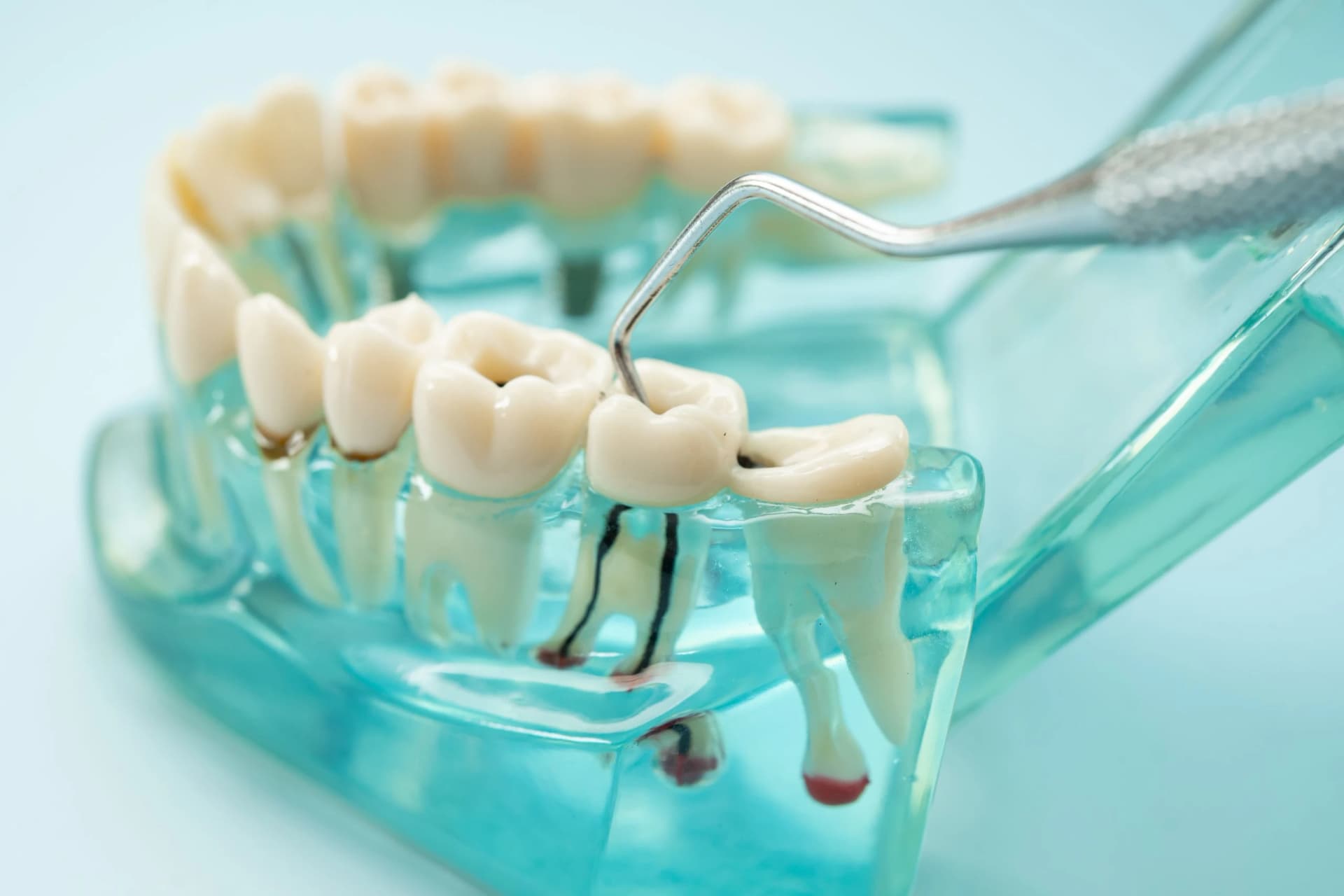
Root canal treatment in Dubai has a reputation it does not really deserve. Most of the pain people associate with it comes from the infected or inflamed tooth itself, not from the procedure. With modern local anaesthetic, treatment is designed to relieve that problem while keeping your natural tooth in place.
This guide explains what the procedure feels like, what happens at each stage, what affects the cost and what recovery usually involves. It is general information, so use it alongside an examination. You can also read about root canal treatment at MID Dental Clinic in City Walk.
Quick answer: does a root canal hurt?
Root canal treatment should not be painful during the procedure, because the tooth is numbed with local anaesthetic first. Most people feel pressure and vibration rather than pain. Soreness afterwards is common, is usually manageable with ordinary pain relief, and tends to improve over days to a couple of weeks.
What is root canal treatment?
Inside every tooth is the pulp, a soft tissue containing nerves and blood vessels. Root canal treatment manages inflammation or infection in that tissue. The affected pulp is removed, and the internal canals are cleaned, shaped, filled and sealed to reduce the risk of further contamination.
The aim is to retain a suitable natural tooth that might otherwise need to be extracted. The American Association of Endodontists notes that a treated tooth can go on to function like any other tooth once it has been properly restored.
How do you know if you need a root canal?
Only an examination and appropriate X-rays can confirm it, but these signs are worth having assessed:
- persistent or throbbing toothache;
- sensitivity to hot or cold that lingers after the food or drink has gone;
- pain when biting or pressing on a tooth;
- swelling or tenderness in the gum near a tooth;
- a darkened tooth, particularly after an injury;
- a small spot on the gum that comes and goes.
Treatment may be recommended after deep decay, dental trauma, a crack or leakage beneath an existing restoration. Some teeth need treatment without causing obvious symptoms, while some painful teeth turn out to have a different cause, which is why a proper diagnosis comes first. A root canal consultation can establish what is happening and whether the tooth can be saved.
If you have severe pain or swelling, do not wait for a routine appointment. Our guide on what to do in a dental emergency in Dubai explains how urgently you need to be seen.
What happens during root canal treatment?
- Examination and diagnosis. The dentist reviews your symptoms, examines the tooth and takes any X-rays that are needed.
- Local anaesthetic. The tooth and surrounding area are numbed before treatment starts.
- Isolating the tooth. The tooth is isolated to keep the treatment area controlled.
- Accessing the canals. A small opening is made to reach the canal system inside the tooth.
- Cleaning and shaping. Inflamed or infected tissue is removed, and the canals are cleaned and shaped.
- Filling and sealing. The canals are filled and sealed. A temporary filling may be placed if another visit is needed.
- Final restoration. The tooth is restored with a suitable filling, onlay or crown.
Treatment may take one or more appointments depending on the infection, your symptoms, the anatomy of the canals and which tooth is involved. The NHS notes that treatment often takes two or more appointments, so ask how many visits your tooth is likely to need.
How much does a root canal cost in Dubai?
There is no single fee that applies to every tooth, so be cautious about any price quoted without an examination. The main factors are:
- The tooth involved: back teeth generally have more canals and more complex anatomy than front teeth.
- Infection and symptoms: active infection may mean extra appointments.
- Number of visits: a longer course of treatment usually costs more.
- First treatment or retreatment: root canal retreatment involves removing the previous filling material and is often more involved.
- Diagnostic records: the X-rays or imaging required for your case.
- The final restoration: a filling, onlay or crown may be priced separately from the root canal itself.
That last point matters most when comparing quotes. Ask for a written estimate that shows whether the final restoration is included. If a crown is likely, our guide to dental crown cost and types in Dubai explains what affects that part of the fee. MID Dental Clinic accepts insurance, but cover varies between policies, so check your own benefits before treatment.
What is recovery like after a root canal?
Your jaw and face may stay numb for several hours, so take care not to bite your cheek or tongue, and avoid hot drinks until the feeling returns. The NHS says the area may feel swollen and sore for a while and should improve within a couple of weeks. The American Association of Endodontists describes mild discomfort for a few days.
To help recovery:
- take pain relief such as paracetamol or ibuprofen if it is suitable for you, following the packet or your clinician’s instructions;
- avoid heavy chewing on a temporarily restored tooth;
- keep brushing and cleaning between your teeth;
- attend your follow-up visits and complete the final restoration.
Contact the clinic if pain or swelling increases, does not improve with pain relief, or a temporary filling comes out.
Why does the final restoration matter?
A root canal treats the inside of the tooth, but the tooth still needs protecting from the outside. Delaying the final restoration can leave it open to leakage or fracture. Depending on how much healthy structure remains, your dentist may recommend a tooth-coloured filling, an onlay or a metal-free crown. If you are unsure how these differ from cosmetic work, read veneers vs crowns in Dubai.
What are the risks of root canal treatment?
Most treatment proceeds as planned, but no procedure is free of risk. Possible complications include persistent infection, fracture, perforation, separated instruments, untreated canal anatomy and the need for further treatment. Your dentist should explain the outlook for your particular tooth before you start.
Is it better to have a root canal or an extraction?
Where a tooth can be restored predictably, saving it is usually the first aim. Extraction may be the better choice when a tooth is badly cracked, has too little structure left or lacks adequate support from the gum and bone.
Removing a tooth also leaves a gap that may need replacing. If that applies to you, compare the options in dental implant vs dental bridge in Dubai and the guide to single-tooth implant cost in Dubai.
Questions to ask before treatment
- What is the diagnosis, and is this tooth restorable?
- How many visits should I expect?
- What are the alternatives, including extraction?
- What final restoration will the tooth need?
- Does the estimate include that restoration?
- What should I do if symptoms return?
Book a root canal assessment in City Walk, Dubai
MID Dental Clinic is located at G08, Building 14, City Walk Residential, Al Wasl, Dubai, UAE. Call +971 54 211 9996 or request an appointment. The clinic is open Tuesday to Sunday, 12:00 PM to 8:00 PM, and closed on Mondays. Explore the Endodontics department or meet Dr. Abdelrahman Ezzat, the clinic’s Medical Director. For sudden symptoms, see emergency root canal care.
- root canal treatment Dubai
- root canal cost Dubai
- does a root canal hurt
- root canal recovery
- علاج عصب الأسنان في دبي
- تكلفة علاج العصب في دبي
Next step
Does this apply to you?
Book a consultation and we will look at your case specifically, rather than in general.
Request an appointment
Common questions
Related questions.
City Walk, Dubai
Does this apply to you?
Book a consultation and we will look at your case specifically, rather than in general.