Full-Mouth Dental Implants in Dubai: Fixed vs Removable Options
Compare fixed full-arch dental implants and removable implant-supported dentures in Dubai. Learn about suitability, treatment stages, cleaning, temporary teeth, costs and long-term maintenance.
- Published
- 25 October 2026
- Reading time
- 8 min
- Written by
 Dr. Abdelrahman Ezzat
- Reviewed by
- Dr. Abdelrahman Ezzat
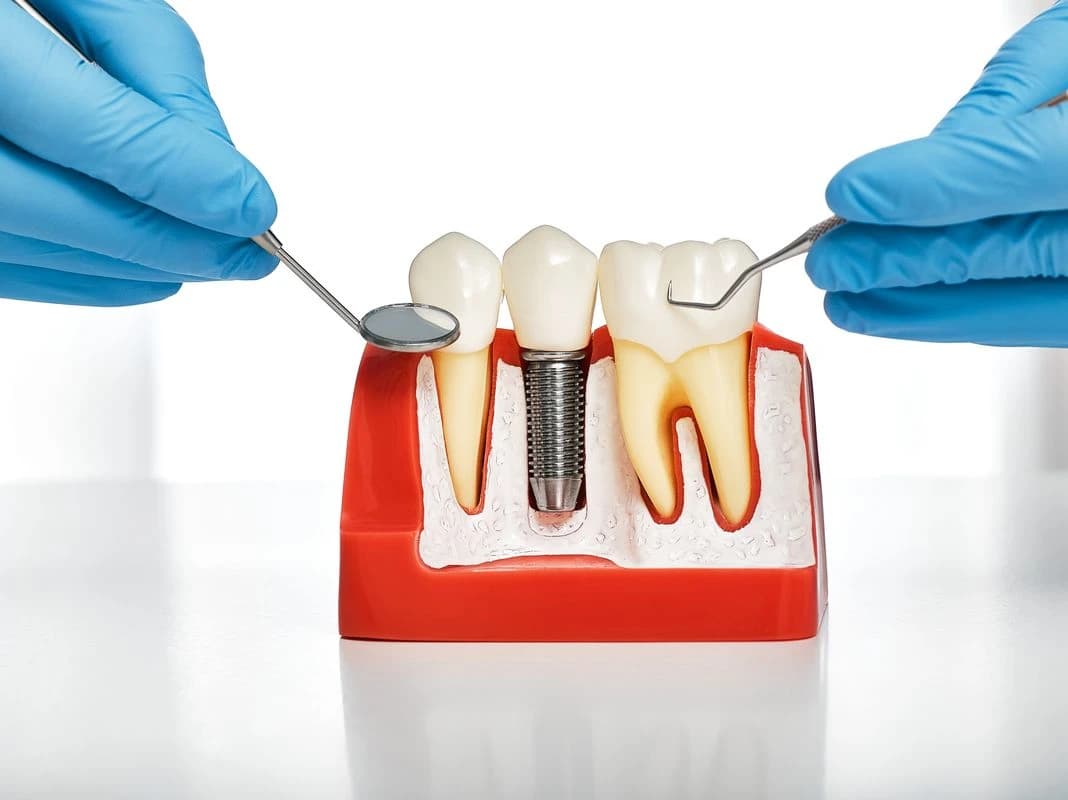
Full-mouth dental implants in Dubai may be considered when most or all teeth in one or both jaws are missing, failing or unable to support a predictable conventional restoration. The term does not describe one universal treatment. Implants may support a fixed full-arch bridge that only a dental professional removes, or a removable overdenture that the patient takes out for cleaning.
The best design depends on which teeth can be preserved, available bone, gum condition, bite, health, hand dexterity, cleaning ability, expectations and budget. A careful assessment is essential before deciding how many implants are needed or whether implant treatment is suitable at all.
What does full-mouth dental implant treatment mean?
‘Full mouth’ may refer to restoring all teeth in the upper jaw, lower jaw or both. The plan may combine natural teeth, implants and other restorations rather than automatically removing every remaining tooth. Teeth that can be predictably maintained should be evaluated before extraction is recommended.
Implants act as supports within the jawbone. They may hold a fixed bridge or stabilise a removable denture. The visible teeth and gum replacement form the prosthesis; the implant fixtures beneath them provide support. Explore full-arch dental implants in Dubai for the dedicated service overview.
Option 1: Fixed full-arch implant teeth
A fixed full-arch restoration is attached to implants and is not removed by the patient. Depending on the clinical design, it may be secured with screws or another professional retention method. It replaces a complete row of teeth and may also replace missing gum volume.
Potential advantages
- the teeth remain in place during daily activities;
- the restoration can provide stable support for speaking and chewing;
- it avoids relying on denture adhesive;
- appearance, tooth position and bite are planned for the individual;
- the dental team can remove a retrievable design when professional maintenance or repair requires it.
Important limitations
- surgery and a suitable implant foundation are required;
- cleaning beneath a fixed bridge requires specific tools and technique;
- the bridge, screws or other components can wear, loosen or fracture;
- the restoration may feel bulkier than natural teeth where gum tissue must also be replaced;
- repairs or replacement may be needed over time;
- not every patient is suitable for immediate fixed temporary teeth.
Option 2: Removable implant-supported denture
An implant-supported denture, also called an overdenture, attaches to implants for improved retention but is removed by the patient for cleaning and usually overnight according to the clinician’s instructions. Attachments may work like clips or press-studs.
Potential advantages
- greater stability than a suitable conventional denture in many cases;
- easier access to clean the denture, implants and gums;
- the prosthesis can replace missing teeth and gum volume;
- some designs may use fewer implants than a fixed full-arch bridge;
- repair, relining or adjustment may be simpler in certain situations.
Important limitations
- the denture must be removed for cleaning;
- it may still have some movement depending on the design and supporting tissues;
- clips, inserts or attachments can wear and require replacement;
- the supporting implants and gums still need professional monitoring;
- patients must be able and willing to insert, remove and clean it correctly.
Fixed vs removable full-arch implants: key differences
Daily removal
Fixed: remains attached and is removed only by a dental professional when needed.
Removable: the patient removes it for cleaning and according to nighttime instructions.
Cleaning access
Fixed: requires brushing plus cleaning beneath the bridge with suitable floss, brushes, irrigating devices or other recommended aids.
Removable: offers direct access to clean the denture and implant attachments, but both parts require a consistent routine.
Feel and stability
Fixed: usually feels more stable because the restoration remains attached.
Removable: gains retention from the implants but can feel different from fixed teeth and may have some movement depending on its design.
Space and facial support
Fixed: requires enough restorative space for strong components and hygienic contours.
Removable: can replace substantial gum and lip support and may be useful when tissue loss is extensive.
Maintenance and repair
Fixed: requires professional removal for some cleaning, inspection or repairs.
Removable: can often be adjusted or repaired more directly, but attachment parts commonly need periodic maintenance.
Cost
Cost depends on the number of implants, surgical complexity, materials, temporary teeth and laboratory design. A fixed full-arch solution is often more complex, but only an individual quotation can compare appropriate options accurately.
How many implants are needed for a full arch?
There is no correct number for every patient. The number and position depend on bone distribution, jaw size, implant dimensions, bite forces, opposing teeth, prosthesis design and whether the restoration is fixed or removable. More implants do not automatically mean a better plan, and fewer implants are not automatically less safe.
People may search for terms such as ‘All-on-4’ or ‘teeth in a day’. These phrases describe particular treatment concepts or marketing terms; they do not confirm that four implants or immediate teeth are suitable for your anatomy. The final design should follow examination, imaging and restorative planning.
Do all remaining teeth need to be removed?
No. Full-arch implant treatment should not automatically mean extracting every tooth. Each remaining tooth should be assessed for decay, cracks, gum and bone support, position, bite, symptoms and restorability. Some plans preserve maintainable teeth, while others recommend extraction when the prognosis is poor.
If extraction is proposed, ask which teeth are considered non-restorable, what evidence supports that conclusion and whether staged treatment or another restorative option exists.
Who may be suitable for full-mouth dental implants?
Potential candidates may include patients who have lost most or all teeth, have a failing dentition that cannot be predictably restored, or struggle with a loose conventional denture. Suitability depends on:
- general health and healing capacity;
- gum health and control of active infection;
- available bone and anatomical structures;
- smoking or nicotine use;
- medicines and conditions that may affect surgery or bone healing;
- bite forces, grinding and jaw relationships;
- ability to clean the proposed restoration;
- willingness to attend multiple visits and long-term maintenance.
Read Am I Suitable for Dental Implants? for a broader assessment guide.
What happens during full-arch implant treatment?
- Consultation and diagnosis: review symptoms, goals, medical history, teeth, gums, bite and existing dentures.
- Records and planning: obtain appropriate X-rays or three-dimensional imaging, photographs, scans and bite records.
- Option design: compare fixed, removable and non-implant alternatives, including which teeth can be preserved.
- Disease control: treat active gum disease, decay or infection before definitive treatment.
- Surgical phase: remove non-restorable teeth when agreed, place implants and perform additional procedures only when indicated.
- Temporary phase: provide an appropriate temporary denture or fixed provisional restoration when clinically possible.
- Healing: monitor the tissues and implant integration while protecting the implants from excessive forces.
- Final prosthesis: record implant positions, test fit, appearance and bite, then deliver the definitive fixed bridge or overdenture.
- Maintenance: establish daily cleaning, professional reviews and repair planning.
For a detailed explanation of the surgical and restorative stages, read the dental implant procedure and recovery guide.
Can I receive fixed teeth on the same day?
Some patients may receive a temporary fixed restoration soon after implant placement, but immediate loading is not suitable or possible for everyone. It depends on implant stability, bone, number and distribution of implants, bite forces, surgical findings, health and the ability to protect the temporary restoration.
Same-day temporary teeth are not the final prosthesis and do not mean healing is complete. Diet restrictions, reviews and later fabrication of the definitive restoration may still be required. A removable temporary option may be safer for some patients.
Will I need bone grafting?
Not necessarily. The clinician evaluates bone height, width and distribution in relation to the planned implant positions. Bone grafting or a sinus lift may be considered when additional support is needed, but the decision is individual.
How do you clean full-arch implant teeth?
For fixed teeth, clean the visible surfaces and beneath the bridge every day using tools recommended for the design. For an overdenture, remove and clean the denture as instructed, then clean the implants, attachments, gums and tongue before reinsertion. Abrasive products or unsuitable tools can damage some components, so ask for a demonstration.
Professional maintenance is essential for both options. The team monitors plaque, gum inflammation, bone levels, bite, implant stability, screws, attachments and wear of the prosthesis.
How much do full-mouth dental implants cost in Dubai?
The total varies according to whether one or both arches are treated, the number of implants, extractions, imaging, grafting, anaesthetic plan, temporary teeth, fixed or removable design, restorative materials, laboratory work and follow-up. A headline ‘per implant’ price does not represent the cost of a complete full-arch restoration.
Request a written breakdown and read Dental Implant Cost in Dubai: What Affects the Price? before comparing quotations.
What are the alternatives?
Alternatives may include preserving and restoring suitable natural teeth, conventional complete dentures, partial dentures, tooth-supported bridges or a staged combination of treatments. Full-mouth rehabilitation does not always require implants. The plan should reflect the least invasive predictable option that meets your health and functional needs.
Full-mouth implant consultation in City Walk, Dubai
MID Dental Clinic is located at G08, Building 14, City Walk Residential, Al Wasl, Dubai. Patients can learn more about Dr. Yasser Seif, Implantology Specialist or request a dental implant consultation. A complete assessment is required before confirming whether a fixed bridge, implant-supported denture or non-implant alternative is appropriate.
- full mouth dental implants Dubai
- full arch dental implants Dubai
- fixed teeth on implants Dubai
- implant supported dentures Dubai
- full mouth teeth replacement Dubai
- زراعة الأسنان للفم الكامل دبي
- زراعة الفك الكامل دبي
- طقم أسنان مدعوم بالزرعات
Next step
Does this apply to you?
Book a consultation and we will look at your case specifically, rather than in general.
Request an appointment
Common questions
Related questions.
City Walk, Dubai
Does this apply to you?
Book a consultation and we will look at your case specifically, rather than in general.