Am I Suitable for Dental Implants in Dubai? Candidate Checklist
Are you suitable for dental implants? Learn how dentists assess gums, bone, general health, smoking, medications and missing teeth before implant treatment in Dubai.
- Published
- 18 October 2026
- Reading time
- 4 min
- Written by
- Dr. Abdelrahman Ezzat
- Reviewed by
- Dr. Abdelrahman Ezzat
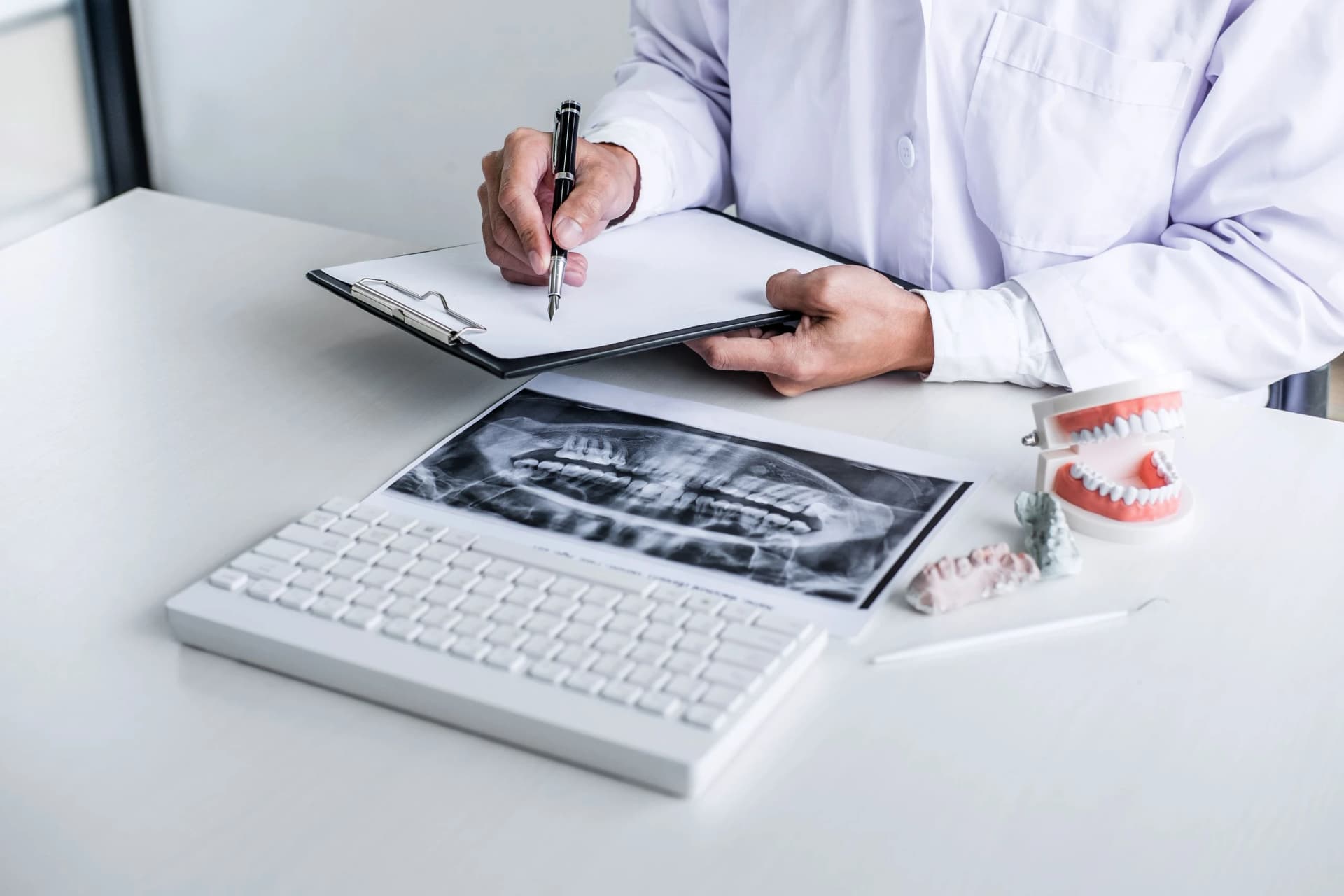
Many adults with one or more missing teeth may be considered for dental implants, but suitability cannot be confirmed from age, photographs or symptoms alone. A dentist must assess your mouth, supporting bone, bite, general health, medications, healing factors and ability to maintain the implant.
The short answer is: you may be suitable if your oral health is stable, there is adequate bone or a realistic grafting option, medical risks are appropriately managed and you can commit to daily cleaning and professional follow-up. This guide explains the main factors assessed during a dental implant consultation in Dubai.
What problems can dental implants address?
Dental implants are surgically placed devices that support replacement teeth. Depending on the pattern of tooth loss, implants may support a single crown, an implant-supported bridge, a removable denture or a fixed full-arch restoration.
A single-tooth implant may replace one suitable missing tooth. Multiple dental implants may be planned for several gaps, while full-arch implant treatment may be considered when most teeth in an upper or lower arch are missing or have a poor prognosis.
Do I need healthy gums before dental implants?
Healthy, stable gum tissues are important for implant treatment. Active gum disease should usually be controlled before implant placement. A history of periodontitis does not automatically prevent treatment, but research indicates that it can increase the long-term risk of implant loss, bone changes and peri-implant disease.
Your assessment may include gum measurements, evaluation of bleeding and plaque, dental X-rays and a review of previous periodontal treatment. Long-term professional maintenance is particularly important for anyone with a history of gum disease.
Do I need enough jawbone for an implant?
An implant needs suitable bone at the planned position, but bone requirements depend on implant dimensions, anatomy and the final restoration. Three-dimensional imaging may be recommended to evaluate bone volume and nearby structures such as nerves and sinus spaces.
Insufficient bone does not always mean implant treatment is impossible. Bone grafting may be considered to rebuild a selected area. For some upper-back-jaw cases, a sinus lift may create additional bone support beneath the sinus. These procedures are not required for every patient and involve their own healing time and risks.
Can smokers have dental implants?
Smoking does not automatically exclude every patient, but it is an important risk factor. A recent systematic review and meta-analysis found that smoking was associated with a higher risk of early implant failure. Smoking can also affect gum health and healing.
Tell the dentist honestly about cigarettes, vaping, shisha and other nicotine or tobacco use. The dental team can explain how these habits may affect your individual plan and discuss cessation support. Do not assume that reducing use briefly removes all risk.
Can I have implants if I have diabetes or another medical condition?
Medical conditions must be assessed individually. The dentist will review your diagnosis, current control, healing history and planned surgical procedure. Some patients may require information or coordination from their physician before treatment.
Bring an accurate list of prescribed medicines, over-the-counter products and supplements. Medicines affecting bone metabolism, immunity, bleeding or healing can influence planning. Never stop or change prescribed medication unless the prescribing clinician advises you to do so.
Is there an age limit for dental implants?
Implants are generally considered after jaw growth is complete. For older adults, chronological age alone is not the deciding factor. General health, independence with oral hygiene, bone and gum condition, treatment goals and the ability to attend follow-up are usually more relevant.
Can I have implants immediately after tooth removal?
Immediate implant placement may be possible in selected cases, but it is not automatically the safest choice. The decision depends on infection, bone walls, gum condition, implant stability, anatomy and the planned temporary tooth. Other cases benefit from socket healing or grafting before implant placement.
Similarly, “teeth in a day” usually refers to selected temporary restorations. Biological healing and the final restoration process continue after the surgical appointment.
What can make implants unsuitable or require treatment first?
Implant treatment may need to be postponed, modified or replaced with another option when there is active infection, uncontrolled gum disease, inadequate bone without a suitable grafting plan, uncontrolled medical risk, poor plaque control, heavy smoking, an unfavourable bite or an inability to maintain the restoration.
Suitability is not always simply yes or no. Some risks can be reduced through gum treatment, decay management, bite planning, improved cleaning, smoking cessation or medical coordination. In other situations, a dental bridge or removable denture may be more appropriate.
What happens during an implant suitability assessment?
The dentist examines your teeth, gums, missing-tooth areas and bite. Records may include dental X-rays, three-dimensional imaging, digital scans and photographs according to clinical need. Your medical history, medications, smoking status and previous dental treatment are reviewed.
The discussion should compare implant treatment with suitable alternatives and explain the expected stages, healing periods, temporary-tooth options, maintenance, risks and fees. An assessment does not obligate you to proceed with surgery.
Dental implant assessment in City Walk, Dubai
MID Dental Clinic is located at G08, Building 14, City Walk Residential, Al Wasl, Dubai, UAE. Dr. Yasser Seif is an Implantology Specialist at MID Dental Clinic.
Explore the Dental Implantology department or request an implant consultation for an individual evaluation. Only a clinical assessment can determine whether implants are appropriate for you.
- Dental implant candidate
- Suitable for dental implants
- Dental implants Dubai
- Implant consultation Dubai
- Dental implant specialist Dubai
- Dental implants City Walk
- هل أنا مناسب لزراعة الأسنان
- زراعة الأسنان في دبي
- استشارة زراعة الأسنان
Next step
Does this apply to you?
Book a consultation and we will look at your case specifically, rather than in general.
Request an appointment
Common questions
Related questions.
City Walk, Dubai
Does this apply to you?
Book a consultation and we will look at your case specifically, rather than in general.