Dental Implant Procedure in Dubai: Step-by-Step Timeline and Recovery
Understand the dental implant procedure in Dubai from consultation and imaging to implant placement, healing, the final tooth and long-term maintenance. Timelines vary according to each clinical case.
- Published
- 24 October 2026
- Reading time
- 7 min
- Written by
 Dr. Abdelrahman Ezzat
- Reviewed by
- Dr. Abdelrahman Ezzat
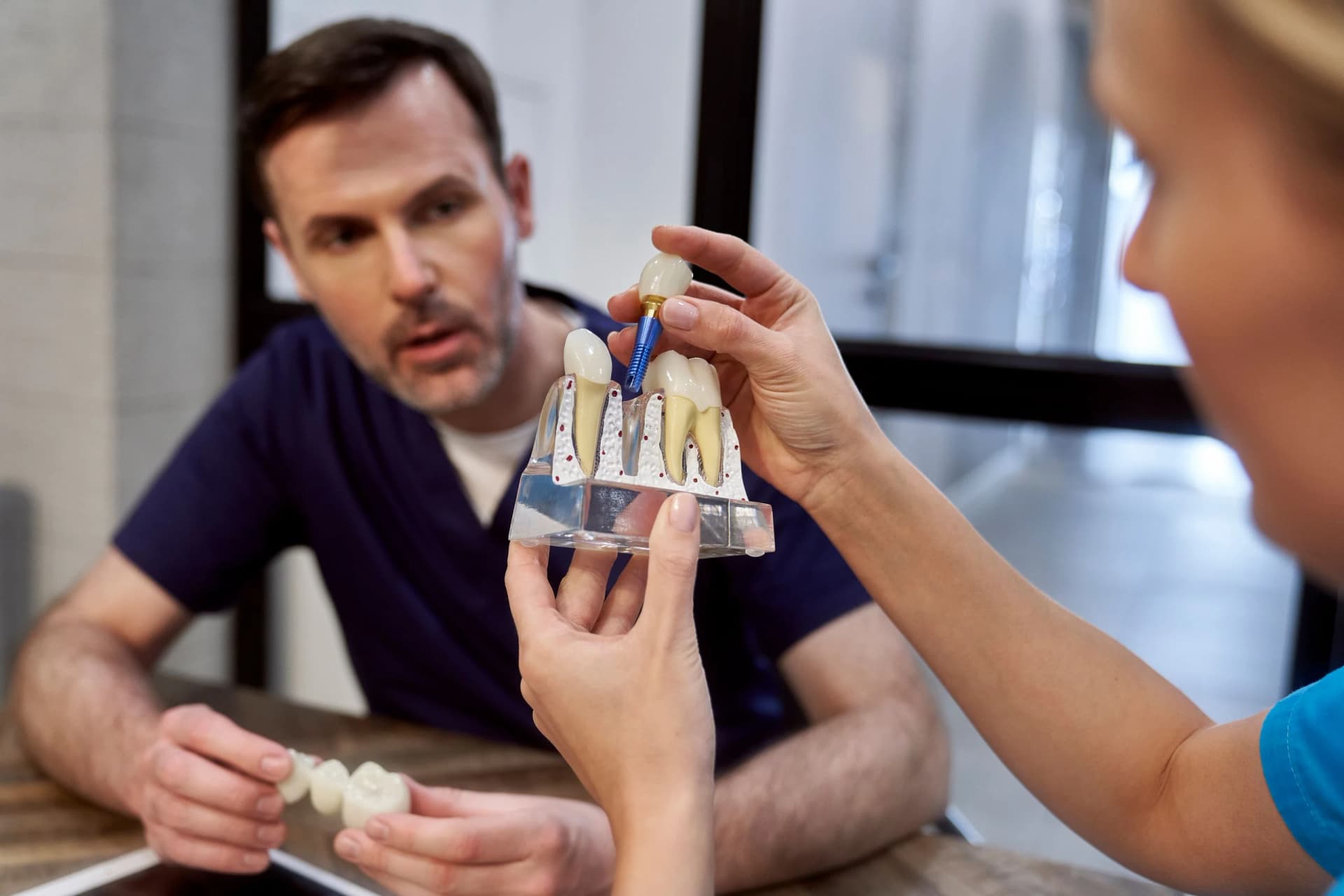
The dental implant procedure in Dubai is usually completed in planned stages rather than one identical appointment for every patient. The process may include consultation and imaging, treatment of active dental problems, extraction or bone preparation when required, implant placement, healing, fabrication of the replacement tooth and ongoing maintenance.
The exact sequence depends on the number and location of missing teeth, bone and gum health, your bite, general health and the final restoration. This guide explains a typical implant timeline, but it cannot replace a personal examination or the instructions provided by your treating clinician.
What is a dental implant?
A dental implant is a component placed surgically in the jawbone to support a replacement tooth or prosthesis. A completed implant restoration commonly includes the implant fixture within the bone, an abutment that connects to it and a crown, bridge or denture that replaces the visible teeth.
Depending on the case, implants may replace one tooth, several teeth or support a full-arch restoration. Explore dental implant treatment in Dubai for an overview of the available options.
Dental implant procedure: the main stages
Stage 1: Consultation and clinical assessment
Treatment begins with a dental implant consultation. The clinician asks about the missing tooth, symptoms, previous treatment and your priorities. Your dental and medical history, current medicines, allergies, smoking or nicotine use and relevant health conditions should be reviewed.
The examination may assess the teeth, gums, bite, missing-tooth space, neighbouring structures and the amount of supporting tissue. This stage determines whether an implant appears suitable and whether another option—such as a bridge, denture or treatment to retain a natural tooth—should also be considered.
Stage 2: Diagnostic imaging and treatment planning
Dental X-rays and, when clinically indicated, three-dimensional imaging may be used to assess the site, bone dimensions and nearby anatomical structures. Photographs, scans or impressions may also support restorative planning.
The written plan should explain the proposed number and position of implants, the final crown or prosthesis, expected stages, alternatives, relevant risks, estimated timeline, maintenance and costs. Ask whether temporary teeth, additional surgery and postoperative reviews are included.
Stage 3: Preparing the mouth
Active infection, uncontrolled gum inflammation or other dental problems may need attention before implant placement. If a failing tooth remains, extraction may be planned before or, in selected cases, at the same appointment as implant placement. The timing depends on infection, bone, soft tissue and the desired restoration.
If available bone is insufficient for the intended position, bone grafting for dental implants may be discussed. Some implants planned in the upper back jaw may require a sinus lift. Neither procedure is necessary for every patient.
Stage 4: Implant placement
Implant placement is commonly performed using local anaesthesia, although the anaesthetic and comfort plan depends on the patient and procedure. Once the area is numb, the clinician prepares the planned site in the jawbone, places the implant and manages the gum tissue according to the surgical design. Stitches may be used.
A healing component may remain visible above the gum in a one-stage approach, or the implant may be covered during early healing and exposed later in a smaller procedure. Your clinician will explain which approach is appropriate and why.
Stage 5: Temporary tooth, when appropriate
A temporary tooth may be offered when appearance or function requires it, but it is not suitable in every situation. Temporary options can include a removable tooth, temporary bridge or provisional implant restoration. Even when a temporary tooth is attached to an implant early, biting forces may need to be limited while healing occurs.
‘Immediate teeth’ and ‘same-day implants’ do not mean biological healing is complete on the day of surgery. The implant still requires careful protection and monitoring while the surrounding bone heals.
Stage 6: Healing and osseointegration
During osseointegration, bone heals around the implant and provides support. This process takes time and may continue for several months. The required healing period varies according to implant stability, location, bone quality, grafting, general health, habits and the planned restoration.
Early gum healing is faster than bone integration, so the site may look comfortable before it is ready for the final tooth. Keep every review appointment and do not test the implant by chewing hard foods unless your clinician says it is safe.
Stage 7: Restorative records and final tooth
After suitable healing, the restorative team records the implant position and surrounding tissues using a digital scan or impression. The laboratory then fabricates the planned crown, bridge or denture. Shape, contacts, bite, appearance and cleanability are assessed before or during fitting.
For one missing tooth, see the dedicated single-tooth dental implant service. For several missing teeth, options may include multiple-teeth implants or an implant-supported bridge. Extensive tooth loss may be managed with full-arch implants or an implant-supported denture in suitable cases.
Stage 8: Review and long-term maintenance
After the restoration is fitted, the clinician checks comfort, bite, gum response and cleaning access. Implants cannot decay like natural teeth, but plaque-related inflammation can affect the surrounding gums and bone. Mechanical wear, loosening or damage can also occur.
Daily brushing and cleaning around and between the implant components, together with professional reviews and hygiene care at an interval based on individual risk, remain essential. Contact the clinic if the restoration feels loose, becomes painful, bleeds repeatedly or becomes difficult to clean.
How long does the complete dental implant process take?
There is no single timeline for all patients. A relatively straightforward case may progress differently from a site needing extraction, infection control, grafting or a complex full-arch restoration. Planning and surgical appointments may be followed by weeks or months of healing, then one or more restorative visits.
Ask for a case-specific timeline with the stages that must occur before the final tooth. A clinician can estimate the schedule after examination and imaging, but healing responses and new findings may alter it.
What should you expect after implant surgery?
Experiences vary. Temporary discomfort, swelling, bruising, minor oozing and difficulty chewing may occur after implant surgery. Follow the written instructions from your treating team because they reflect the extent of your procedure and your health.
Common guidance may include:
- resting and avoiding strenuous activity for the period advised;
- using prescribed or clinician-approved pain relief exactly as directed;
- choosing softer foods while the area is tender;
- avoiding chewing directly on the surgical site;
- keeping the rest of the mouth clean without disturbing the wound;
- following specific instructions for brushing or mouth rinses;
- not smoking or using nicotine during healing; and
- attending the scheduled postoperative review.
Do not copy another patient’s medicine or aftercare routine. Antibiotics are not automatically required for every implant procedure and should only be used when prescribed for your individual situation.
When should you contact the clinic after surgery?
Contact the treating clinic promptly if bleeding does not settle with the instructed pressure, pain or swelling is worsening rather than improving, you develop fever, pus, a bad taste with increasing symptoms, the implant or temporary tooth feels mobile, or you have persistent altered sensation. Seek urgent medical care for difficulty breathing or swallowing, rapidly increasing facial swelling, severe allergic symptoms or uncontrolled bleeding.
Can I return to work after dental implant placement?
This depends on the extent of treatment, your work and how you feel. Some patients schedule a short recovery period after a straightforward placement; more involved surgery or grafting may require additional time. Ask the clinician before surgery, particularly if your work is physically demanding or involves travel.
What can delay an implant timeline?
Possible reasons include the need to control gum disease or infection, staged extraction, insufficient bone, graft healing, delayed wound healing, smoking, uncontrolled health conditions, inadequate initial stability or a complex restorative plan. Delaying the final tooth when healing is incomplete is a safety decision, not necessarily a treatment failure.
How much does the dental implant procedure cost in Dubai?
Cost varies according to diagnostics, the number of implants, surgical complexity, the final restoration, extractions, grafting, temporary teeth and laboratory work. Review the guide to dental implant cost in Dubai and request an itemised quotation after assessment.
Book a dental implant consultation in City Walk
MID Dental Clinic is located at G08, Building 14, City Walk Residential, Al Wasl, Dubai. Patients can learn more about Dr. Yasser Seif, Implantology Specialist or request a dental implant consultation. A clinical assessment is necessary before confirming suitability, treatment steps, recovery expectations or timing.
- dental implant procedure Dubai
- dental implant timeline
- dental implant recovery
- dental implant healing time
- implant surgery Dubai
- خطوات زراعة الأسنان
- مدة زراعة الأسنان
- التعافي بعد زراعة الأسنان
Next step
Does this apply to you?
Book a consultation and we will look at your case specifically, rather than in general.
Request an appointment
Common questions
Related questions.
City Walk, Dubai
Does this apply to you?
Book a consultation and we will look at your case specifically, rather than in general.