Clear Aligners in Dubai: Cost, Treatment Process and Who Is Suitable?
Considering clear aligners in Dubai? Learn how treatment works, what affects cost and duration, who may be suitable and when fixed braces may be recommended.
- Published
- 31 October 2026
- Reading time
- 9 min
- Written by
 Dr. Abdelrahman Ezzat
- Reviewed by
- Dr. Abdelrahman Ezzat
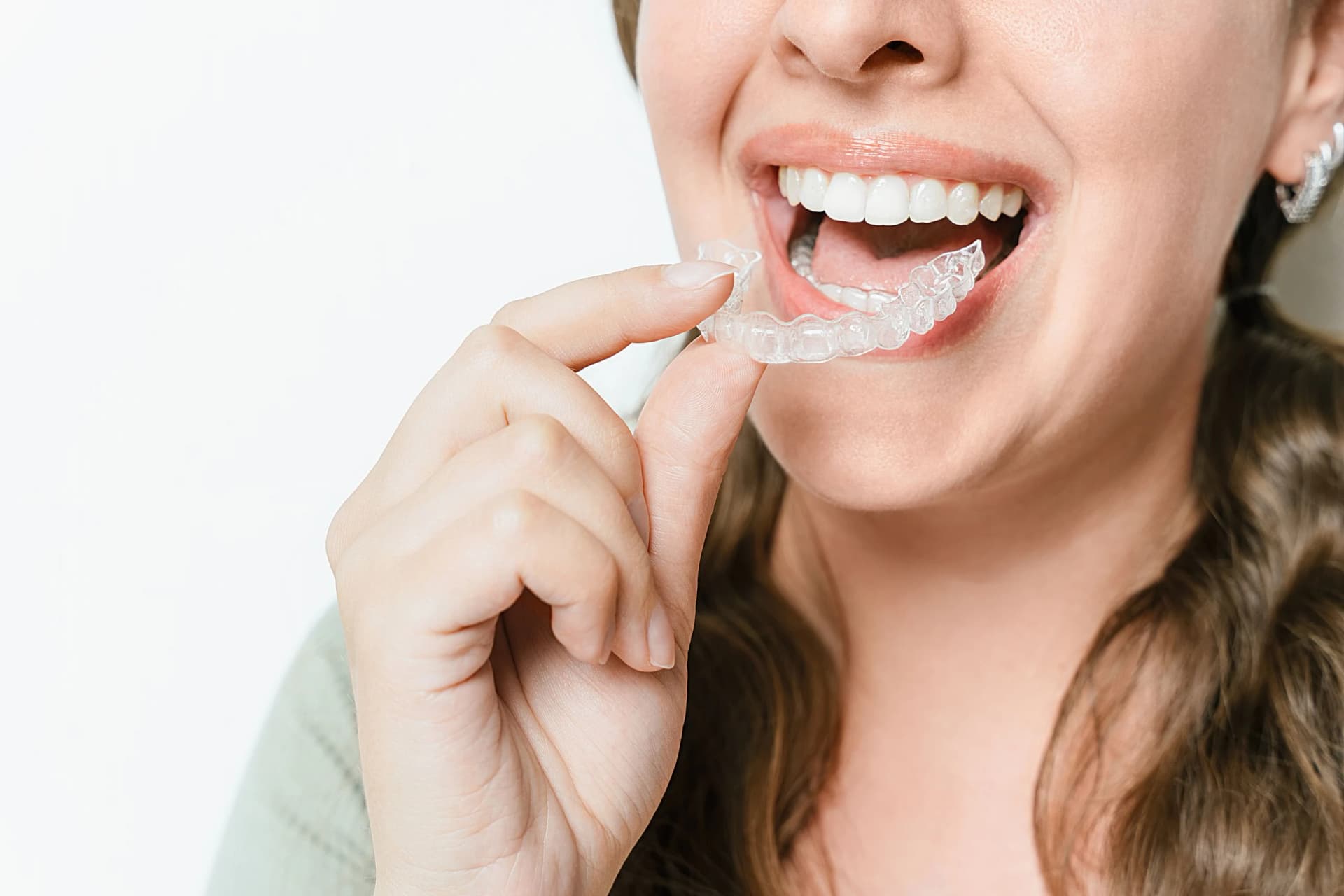
Clear aligners in Dubai offer a discreet, removable way to move teeth in suitable orthodontic cases. However, they are not simply cosmetic trays that can be selected from photographs alone. Safe treatment begins with a diagnosis of the teeth, gums, jaws and bite, followed by a planned series of custom aligners and regular clinical monitoring.
At MID Dental Clinic in City Walk, suitability is assessed individually. Explore the clinic's clear aligner service in Dubai or use this guide to understand the process, costs, responsibilities and limitations before booking.
Quick answer: are clear aligners right for me?
Clear aligners may be suitable for selected cases of crowding, spacing, crooked teeth and certain bite concerns. They work best when the planned movements are predictable and the patient can wear the trays for the prescribed daily period—commonly around 20–22 hours. Some complex movements, severe bite problems or cases with inconsistent wear may be managed more predictably with fixed braces or a combined approach. Only a clinical and radiographic assessment can confirm suitability.
What are clear aligners?
Clear aligners are a sequence of thin, custom-fitted trays designed to apply controlled pressure to selected teeth. Each aligner represents a stage in the treatment plan. Patients usually change to the next tray according to their clinician's instructions, allowing the teeth to move gradually.
The trays are removable for meals, toothbrushing and flossing. Their discreet appearance makes them attractive to many adults and teenagers, but removability also creates responsibility: treatment cannot work as planned if the aligners are not worn consistently.
What can clear aligners treat?
Depending on the diagnosis and severity, clear aligners may help manage:
- mild to moderate crowding;
- spaces or gaps between teeth;
- selected rotated or crooked teeth;
- some overbite, underbite, open-bite or crossbite concerns;
- minor relapse after previous orthodontic treatment;
- alignment before planned restorative or cosmetic dental care.
The name of a problem does not determine suitability by itself. Two patients with “crowding” may need very different movements. Tooth shape, root position, gum and bone support, jaw relationships and patient cooperation all affect the recommendation.
Who may not be an ideal candidate?
Clear aligners may not be the most predictable first choice for every patient. Fixed metal braces, ceramic braces or a combined plan may be recommended when:
- the required tooth movements are highly complex;
- there are severe rotations, large spaces or significant bite discrepancies;
- an impacted tooth requires coordinated movement;
- the patient cannot commit to the prescribed daily wear;
- active decay or gum disease needs treatment first;
- supporting bone or gum conditions limit safe movement;
- the patient is still growing and another orthodontic approach better addresses the problem.
Existing crowns, bridges, implants and missing teeth do not automatically rule out aligners, but they must be incorporated into the plan because implants cannot be moved like natural teeth.
How does clear aligner treatment work?
1. Orthodontic consultation
The clinician discusses your concerns, dental history, previous orthodontic treatment and goals. The teeth, gums, jaws, facial balance and bite are examined. Start with an orthodontic consultation in Dubai.
2. Diagnostic records
Clinical photographs, digital scans and appropriate X-rays may be taken. These records help evaluate tooth and root positions, supporting structures and the relationship between the upper and lower teeth.
3. Diagnosis and treatment objectives
The clinician identifies the orthodontic problems and explains what treatment may realistically improve. The plan should address the bite and all relevant teeth, not only the front teeth visible in a smile photograph.
4. Digital treatment planning
Specialised software is used to plan the sequence of tooth movements. A digital preview can help explain the intended direction of treatment, but it is a simulation—not a guarantee of the exact biological result.
5. Aligner production and delivery
Custom aligners are manufactured from the approved plan. At delivery, the fit is checked and the patient receives instructions on wear, insertion, removal, cleaning and tray changes.
6. Attachments, elastics or other aids
Small tooth-coloured attachments may be bonded to selected teeth to help the trays grip and produce particular movements. Some plans also use elastics. These additions are part of aligner treatment and may be visible at close range.
7. Regular progress reviews
The clinician checks whether the teeth are tracking as planned and whether the teeth and gums remain healthy. Do not skip reviews simply because several trays were supplied in advance.
8. Refinements when needed
If some movements do not develop as planned, a new scan and additional aligners may be recommended. Ask whether refinements are included in the quotation and for how long.
9. Retainers after active treatment
After the final aligner, orthodontic retainers help maintain the corrected positions. Retention is a long-term part of care because teeth can move after treatment.
How many hours must clear aligners be worn?
Many plans require approximately 20–22 hours of daily wear, but you should follow the exact schedule prescribed for your case. Aligners are usually removed for eating, drinking anything other than plain water, brushing and flossing.
Wearing the trays only at night is generally not equivalent to a full-time aligner prescription. Insufficient wear can prevent trays from fitting, delay treatment and compromise the planned result.
How often are aligners changed?
Some patients change aligners weekly, while others follow a different schedule based on the movements, material, biological response and clinician's instructions. Never move to the next tray early because the current aligner feels loose, and do not remain in a tray longer without advice if it no longer fits correctly.
How long does clear aligner treatment take?
Duration varies from a few months for selected limited movements to longer for comprehensive alignment and bite correction. The estimate depends on complexity, number of trays, biological response, daily wear, appointment attendance and whether refinements are required.
Clear aligners are not automatically faster than braces. A personalised timeline can be estimated after diagnostic records and may change as the teeth respond.
How much do clear aligners cost in Dubai?
Clear aligner cost in Dubai varies according to:
- the complexity and number of movements;
- whether one or both arches are treated;
- the number of planned aligners;
- diagnostic scans and X-rays;
- attachments, elastics or additional procedures;
- the number of clinical reviews;
- refinement aligners;
- replacement of lost or damaged trays;
- retainers and post-treatment reviews.
An advertised starting price may apply only to a limited case or exclude important elements. Ask for a written quotation showing the full treatment scope. For a broader comparison, read our guide to braces and clear aligner costs in Dubai.
What should a clear aligner quotation include?
- consultation and diagnostic records;
- treatment of one or both arches;
- the planned aligner package or number of trays;
- attachments and elastics when required;
- routine monitoring appointments;
- refinements and their eligibility period;
- emergency or unscheduled reviews;
- final records and removal of attachments;
- retainers and post-treatment checks;
- replacement fees for lost or damaged aligners;
- any applicable taxes or financing charges.
Benefits of clear aligners
- Discreet appearance: the trays are less noticeable than conventional fixed braces.
- Removability: they can be removed for meals and oral hygiene.
- No bracket-related food restrictions: patients can generally maintain their normal diet when the trays are removed.
- Digital planning: planned stages can be explained visually.
- Smooth surfaces: there are no fixed brackets or wires, although temporary pressure and edge irritation can still occur.
Limitations and responsibilities
- Aligners work only when worn as prescribed.
- They are not suitable for every orthodontic movement.
- Attachments may be needed and can make treatment more visible.
- Trays can be lost, damaged, stained or distorted.
- Eating or drinking sugary or acidic liquids with trays in place may trap them against teeth.
- Temporary pressure or tenderness can occur after starting a new aligner.
- Speech may feel slightly different during the initial adjustment period.
- Refinement aligners may extend the original estimate.
- Retainers remain necessary after active treatment.
How to eat and drink with clear aligners
Remove aligners for meals and for drinks other than plain water unless your clinician gives different instructions. Hot drinks may distort the material, while coloured drinks can stain it. Sugary or acidic liquids trapped inside a tray can increase exposure of the teeth.
After eating, clean your teeth before reinserting the aligners whenever possible. Carry a protective case rather than wrapping trays in tissue, where they may be damaged or accidentally discarded.
How to clean clear aligners
Rinse aligners when removing them and clean them according to the instructions provided. Use cool or lukewarm water, because excessive heat can change the fit. Avoid harsh chemicals or abrasive cleaning methods unless specifically recommended. Continue brushing twice daily and cleaning between the teeth.
What if an aligner is lost, cracked or does not fit?
Contact the clinic for advice rather than deciding independently to skip ahead. The correct response may be to wear the previous tray, move to the next tray, replace the lost aligner or attend for assessment, depending on the treatment stage and fit. A tray that suddenly stops seating may indicate insufficient wear or that a tooth is not tracking as planned.
Clear aligners vs fixed braces
Clear aligners are removable and discreet but depend strongly on patient cooperation. Fixed braces remain attached and may offer more predictable control for some complex movements. Ceramic braces provide a less noticeable fixed alternative. The correct comparison is not which appliance is universally better, but which is more suitable for the diagnosis and lifestyle.
Read how to evaluate orthodontic care in Dubai before comparing providers.
Questions to ask before starting
- What is my complete orthodontic diagnosis?
- Can aligners predictably achieve the movements I need?
- Would braces provide better control in my case?
- Are both arches and my bite included in the plan?
- How many hours must I wear the trays?
- How often will progress be reviewed?
- Are refinements included and for how long?
- What happens if a tray is lost or does not fit?
- Which retainers will I need after treatment?
- What is included in the total fee?
Book a clear aligner consultation in City Walk, Dubai
MID Dental Clinic is located at G08, Building 14, City Walk Residential, Al Wasl, Dubai, UAE. Explore the Orthodontics department, meet the clinical team, or request an orthodontic appointment. A consultation can determine whether clear aligners, fixed braces or another approach is suitable for your teeth and bite.
- clear aligners Dubai
- clear aligners cost Dubai
- invisible braces Dubai
- clear teeth aligners near me
- best clear aligners Dubai
- adult clear aligners Dubai
- التقويم الشفاف في دبي
- تكلفة التقويم الشفاف في دبي
- تقويم شفاف قريب مني
Next step
Does this apply to you?
Book a consultation and we will look at your case specifically, rather than in general.
Request an appointment
Common questions
Related questions.
City Walk, Dubai
Does this apply to you?
Book a consultation and we will look at your case specifically, rather than in general.