
Cosmetic
How to Choose the Best Veneer Dentist in Dubai
Looking for the best veneer dentist in Dubai? Compare assessment, conservative planning, materials, smile design, results, communication and aftercare.
- Published
- 18 September 2026
- Reading time
- 7 min
- Reviewed on
- 18 September 2026
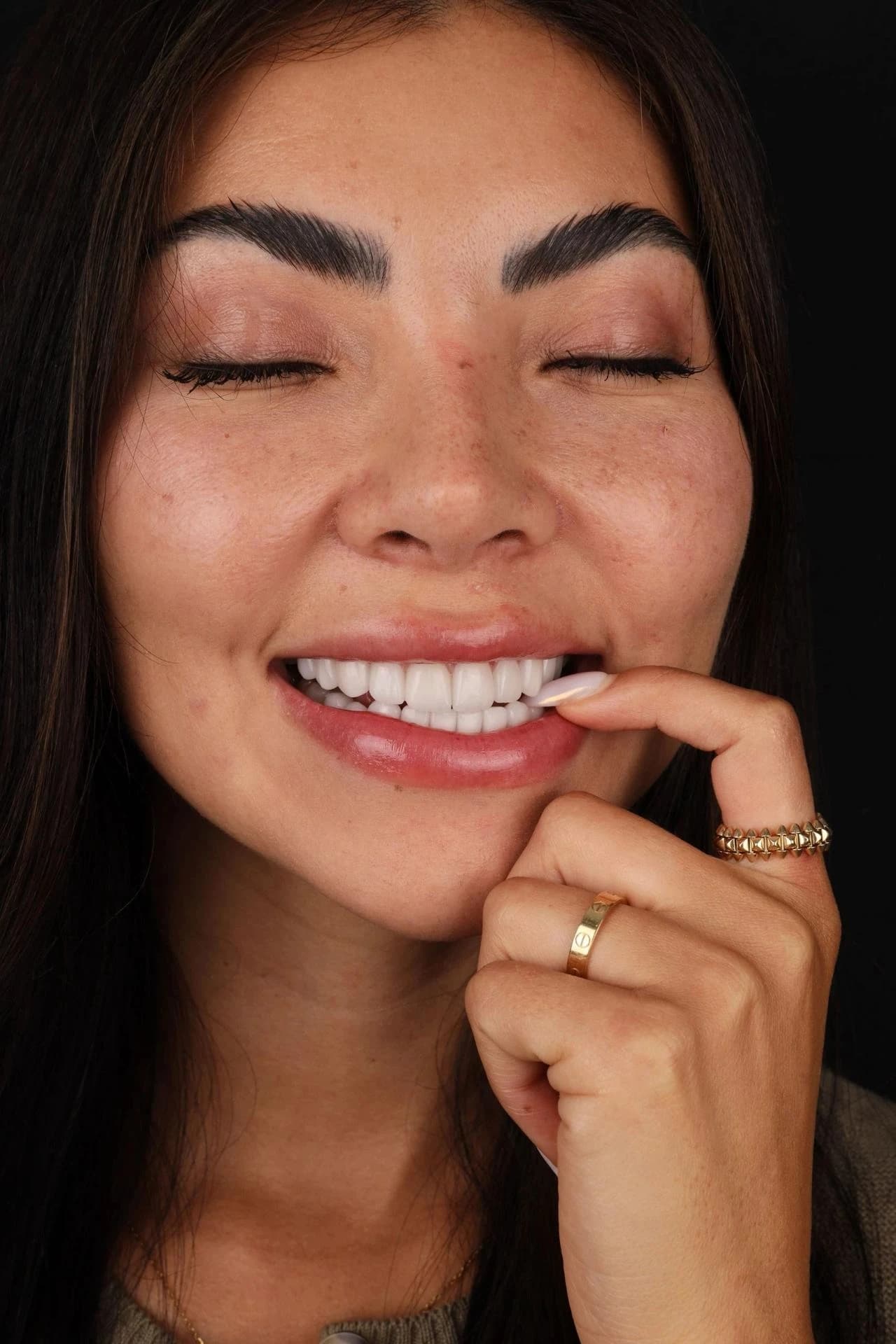
There is no single veneer dentist who is automatically the “best” for every patient. The right dentist is someone who carefully evaluates your oral health, understands your aesthetic goals, explains the alternatives and recommends a treatment that preserves healthy tooth structure whenever clinically possible.
If you are searching for the best veneer dentist in Dubai, avoid making your decision based only on social-media photographs, promotional claims or the lowest price. Veneers can involve permanent changes to natural teeth, so clinical planning, communication and long-term follow-up matter as much as the appearance of the final result.
What makes a good veneer dentist?
A good veneer dentist combines clinical diagnosis, restorative knowledge, aesthetic planning and clear patient communication. The dentist should understand how the teeth, gums, bite, lips and facial features work together—not simply select a bright shade and uniform tooth shape.
The treatment should be personalised because patients have different teeth, smile lines, facial proportions, bite forces and expectations.
How do you choose the best veneer dentist in Dubai?
1. Confirm the dentist's professional role
Review the dentist's professional profile and ensure the practitioner is appropriately licensed to provide dental care in Dubai. The profile should clearly explain the dentist's title and areas of practice without using unsupported specialist claims.
Patients considering veneers at MID Dental Clinic can review the profile of Dr. Abdelrahman Ezzat, Medical Director and General Dentist. His areas of care include preventive, restorative and aesthetic dentistry.
2. Look for a complete examination
Veneer treatment should begin with an examination of the teeth, gums, existing restorations and bite. Clinical photographs, digital scans, impressions or X-rays may also be required depending on the patient's condition.
A dentist should identify tooth decay, gum inflammation, infection, weakened teeth, enamel loss, grinding and bite problems before recommending cosmetic treatment. A comprehensive dental check-up helps establish whether the mouth is healthy enough for veneers.
3. Prioritise conservative treatment planning
A suitable dentist should explain how much tooth preparation may be required and why. Some cases require conservative enamel reduction, while selected cases may need very little preparation.
The objective should be to preserve healthy tooth structure while creating sufficient space for restorations that fit naturally. Claims that every patient can receive no-preparation veneers should be considered carefully because treatment requirements vary.
4. Choose a dentist who discusses alternatives
Veneers are not the only way to improve a smile. A dentist should explain whether the concern could be treated more conservatively with:
- Professional teeth whitening.
- Composite bonding.
- Clear aligners or braces.
- Tooth contouring.
- Replacement of an old restoration.
- Gum treatment or contouring when clinically appropriate.
A dentist who explains alternatives helps the patient understand why veneers are—or are not—the appropriate option.
5. Evaluate the approach to smile design
Smile design should consider tooth proportions, shade, translucency, surface texture, gum levels, lip movement, facial characteristics and the patient's preferences.
Natural-looking veneers do not need to be identical, extremely white or arranged in a perfectly straight line. Subtle variations can help restorations complement the patient's appearance and remaining natural teeth.
Patients considering changes involving several aspects of their smile may benefit from a personalised smile makeover assessment rather than assuming that veneers alone are required.
6. Ask how the bite will be assessed
Veneers must function within the patient's bite. Grinding, clenching, deep bite, edge-to-edge contact and other functional factors can increase stress on veneers and natural teeth.
The dentist should evaluate how the upper and lower teeth meet and explain whether orthodontics, bite adjustment or a custom night guard may be recommended.
7. Ask which veneer material is being proposed
“Veneer” describes the type of restoration, not one specific material. Options may include composite resin and different dental ceramics, including E-max lithium-disilicate ceramic.
The dentist should explain:
- Which material is recommended.
- Why it is suitable for your teeth.
- Its aesthetic and functional limitations.
- How it is maintained.
- Whether it can be repaired.
- Whether tooth preparation is required.
Material selection should be based on the clinical situation, not only current trends or brand names.
8. Review relevant before-and-after cases
Before-and-after photographs can show the dentist's treatment style, but the cases should be relevant to your concern. A person with mild discolouration cannot expect the same plan or result as someone with worn teeth, old crowns or significant alignment problems.
Look for clear, consistent photographs and results that respect individual facial features. Every case should be published with the patient's consent, and results should never be guaranteed.
9. Assess the consultation and communication
The dentist should listen to what you want to change and what you want to preserve. You should receive understandable answers about preparation, materials, treatment stages, risks, alternatives, maintenance and expected limitations.
A good consultation should give you enough information to make a decision without pressure. Be cautious if treatment is recommended immediately without adequate examination or explanation.
10. Request a written treatment plan
The written plan should identify:
- The teeth proposed for treatment.
- The selected veneer material.
- Whether preparation is expected.
- Any treatment required beforehand.
- The anticipated appointment sequence.
- Temporary restorations when applicable.
- The complete quotation and what it includes.
- Follow-up and maintenance requirements.
Our guide to veneers cost in Dubai explains which factors may influence the final quotation.
11. Consider follow-up accessibility
Veneer treatment can involve consultation, planning, preparation, fitting, bonding and review appointments. Choosing a clinic that is reasonably accessible can make treatment and future maintenance more convenient.
Patients comparing local options can read our guide to finding veneers near them in Dubai.
What should happen during a veneer consultation?
A comprehensive consultation should include a discussion of your concerns and an assessment of your oral health. Depending on the case, the dentist may:
- Review your dental and relevant medical history.
- Examine your teeth, gums, bite and existing restorations.
- Take clinical photographs, scans or impressions.
- Request X-rays when clinically indicated.
- Discuss colour, shape, proportion and smile preferences.
- Explain porcelain, E-max and composite options.
- Compare veneers with alternative treatments.
- Describe any preparation and temporary restorations.
- Discuss maintenance, possible complications and future replacement.
A recommendation should only be finalised after the dentist understands both the clinical condition and the patient's objectives.
What questions should you ask a veneer dentist?
- Why do you recommend veneers for my teeth?
- Are there less invasive alternatives?
- How many teeth need treatment?
- Which material do you recommend, and why?
- Will healthy enamel need to be removed?
- How will the proposed smile be designed?
- Can I review cases similar to mine?
- How will my bite be assessed?
- What happens if I grind my teeth?
- Who will fabricate the veneers?
- What does the quotation include?
- What maintenance and follow-up will I need?
- What are the main risks and limitations?
Warning signs when selecting a veneer provider
Consider obtaining another professional opinion if a provider:
- Calls themselves the best without verifiable information.
- Promises guaranteed or identical results.
- Recommends veneers without examining your mouth.
- Does not assess gum health or the bite.
- Claims that no-preparation veneers suit everyone.
- Cannot clearly identify the proposed material.
- Does not discuss alternative treatments.
- Pressures you to begin immediately.
- Provides an unclear quotation.
- Offers no plan for follow-up care.
Is the most expensive veneer dentist always the best?
No. A higher price does not automatically guarantee better treatment, and the lowest price does not automatically mean poor care. Compare what the plan includes and whether it is clinically appropriate.
Important considerations include examination quality, treatment planning, material, laboratory work, dentist involvement, temporary restorations, bite assessment, communication and follow-up. The decision should be based on the complete value and suitability of the proposed care.
How can you identify natural-looking veneer results?
Natural-looking results usually complement the patient's face, lips, gums and remaining teeth. Consider whether the veneers show appropriate proportions, individual character, surface texture and a shade that suits the patient.
The goal does not have to be an extremely white or perfectly uniform smile. A patient should be able to discuss whether they prefer a subtle enhancement or a more noticeable cosmetic transformation.
Who provides veneer consultations at MID Dental Clinic?
Dr. Abdelrahman Ezzat is the Medical Director and a General Dentist at MID Dental Clinic in City Walk, Dubai. His work includes preventive, restorative and aesthetic dental care, with an emphasis on minimally invasive planning and preserving healthy tooth structure whenever clinically appropriate.
During a consultation, Dr. Abdelrahman can assess the teeth, gums and bite, discuss the changes the patient would like to make and explain whether porcelain veneers or another treatment may be suitable.
Book a veneer consultation in City Walk, Dubai
MID Dental Clinic is located at G08, Building 14, City Walk Residential, Al Wasl, Dubai, UAE. The clinic provides individual assessments for porcelain veneers, composite bonding, whitening and personalised smile makeovers.
You can request a veneer consultation to receive an assessment and written treatment plan. Treatment suitability and expected results can only be confirmed after a clinical examination.
- best veneer dentist Dubai
- veneer dentist Dubai
- cosmetic dentist Dubai
- porcelain veneers Dubai
- natural-looking veneers
- veneers consultation Dubai
- أفضل طبيب فينير في دبي
- طبيب تجميل أسنان دبي
- فينير الأسنان في دبي
Next step
Does this apply to you?
Book a consultation and we will look at your case specifically, rather than in general.
Request an appointment
Common questions
Related questions.
City Walk, Dubai
Does this apply to you?
Book a consultation and we will look at your case specifically, rather than in general.